
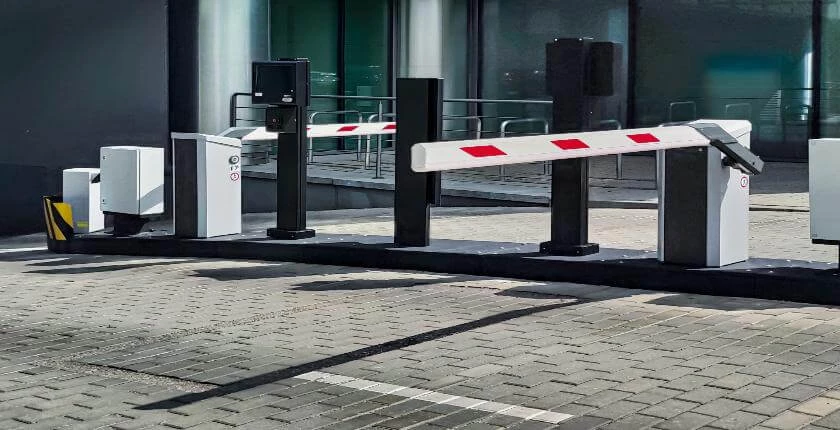
Automatic Barriers
Get in TouchAt MHC Gates, we specialise in providing high-quality automatic barriers for properties, enhancing security and controlling access efficiently. Our automatic barriers are designed to manage entry and exit in various environments such as car parks, commercial sites, and gated communities.
With options catering to different needs, we ensure that every installation meets specific client requirements in the area. Contact us today for a tailored solution that fits your needs.
What Is Automatic Barriers?
Automatic barriers are motorised gates used to control vehicle access to restricted areas. At MHC Gates, we offer a range of barrier systems that operate using electrical energy, sensors, and remote controls to ensure seamless access management.
These systems incorporate features such as loop detectors, photocells, and safety edges to enhance operational safety and efficiency. Our automatic barriers comply with industry standards like EN 12453, ensuring safety in operation, and are equipped with emergency manual override options for use during power outages.
Different materials, like stainless steel or galvanised steel, are used to resist corrosion and withstand harsh weather conditions, extending the barrier's lifespan. Suitable for commercial, industrial, and residential settings, our barriers help maintain security and manage traffic flow effectively, providing reliability and durability.
Our team is prepared to assist with installation and ongoing maintenance, ensuring your barriers continue to perform well.
What Types of Automatic Barriers Are Available?
We provide various types of automatic barriers to suit different applications:
Rising Arm Barriers: Ideal for controlling vehicle access, these barriers feature a boom arm that lifts vertically. They work effectively in environments such as parking lots, where limited access and space efficiency are crucial. Our barriers are equipped with LED lights and can integrate with RFID and ANPR systems for automated entry.
Swing Gates: Secure areas with a gate that swings open from a central pivot point. These gates are typically used in residential developments or commercial properties that have ample space. We offer systems compatible with remote controls and intercom systems to facilitate user control.
Sliding Gates: Suitable for properties with limited space, these systems slide along a track. Commonly used in industrial sites, the gates are made from galvanised steel or aluminium for durability, and they comply with safety standards such as EN 12453 to prevent accidents.
Bi-Folding Gates: Offer rapid access with panels that fold back, optimal for high-traffic locations like logistics centres. These gates are equipped with motion detection sensors and emergency-release mechanisms to maintain efficiency and safety during operation.
Our automatic barriers are designed to meet your specific security needs and can be customised according to your property's requirements. Contact us for a consultation today.
What Are Automatic Barriers Suitable For?
Automatic barriers from MHC Gates are perfect for various applications. They are ideal for controlling vehicle access in car parks, managing entry to commercial and industrial sites, and securing gated communities.
Designed to operate smoothly with boom lengths of up to six metres, our barriers accommodate wide entrances and exit points effectively.
Our systems help prevent unauthorised access and maintain orderly traffic flow with features such as automatic number plate recognition (ANPR) systems and RFID card readers for seamless entry and exit. These barriers can be programmed to integrate with existing security protocols and offer compatibility with systems such as CCTV surveillance and intercoms, adding layers of security.
Available in durable materials like galvanised steel and aluminium, they resist corrosion and withstand various weather conditions.
Typically installed within three to five days, each project complies with BS EN 12453 safety standards for powered gates. However, they may not be suitable for pedestrian-only zones, where turnstiles or bollards might be more appropriate.
For tailored solutions, please contact our team.
When Is Automatic Barrier Installation Needed?
Installing automatic barriers is crucial when there is a need to regulate entry and exit effectively. In environments such as industrial sites and commercial car parks, automatic barriers can be essential for preventing unauthorised access and ensuring the safety of both vehicles and pedestrians.
These barriers are typically used with control systems, such as keypads, remote controls, or card readers, to offer flexible access management.
They are especially useful for businesses looking to enhance security, manage parking spaces, or control site access. Public facilities like schools and hospitals can benefit by directing traffic efficiently and maintaining operational flow.
Residential complexes may also require barriers to restrict vehicle entry to approved visitors only, ensuring the privacy and safety of residents. In every scenario, we tailor our solutions to fit the specific needs of the location, ensuring optimal performance.
Contact us to discuss the best automatic barrier solution for your needs.
How Does Automatic Barrier Installation Work?
Our automatic barrier installation process is streamlined and efficient, ensuring your security needs are met reliably.
Consultation: We begin with a site assessment and consultation to understand your specific requirements, such as traffic flow, security needs, and compliance with local zoning regulations.
Design and Planning: Based on the initial assessment, we design a barrier layout using CAD software and create a detailed plan. This includes selecting suitable barrier types like rising arm or swing gate systems, and specifying materials such as galvanised steel or reinforced aluminium for durability.
Installation: Our skilled technicians use precise alignment tools and follow the manufacturer's specifications to install the barriers. The process includes setting up control systems, whether keypad entry, RFID readers, or remote controls, to meet your operational needs.
Testing and Handover: We conduct comprehensive testing to ensure the barrier system functions correctly, checking for smooth operation and integration with existing security systems. After successful testing, we provide a detailed guide and training for your team to ensure smooth operation from day one.
By choosing MHC Gates, you invest in a secure, efficient installation process tailored to your property type, be it commercial, industrial, or residential.
How Long Does Automatic Barrier Installation Take?
Most automatic barrier installations are completed within one to three days, depending on the complexity and site conditions. During the installation process, our skilled technicians evaluate the site layout and determine the best locations for barrier fittings and control systems.
We use high-quality materials, such as galvanised steel and aluminium, to ensure longevity and durability.
Our installation includes integrating safety features like induction loops and photocell sensors to prevent accidental closures and ensure smooth operation. We follow industry standards, such as BS EN 12978, to maintain safety and performance.
After installation, systems typically require minimal downtime, allowing for immediate use and reliable performance. We also offer a handover process to familiarise users with operation and maintenance.
For specific installations or unique requirements, our team is available to provide a tailored timeline.
Who Needs Automatic Barriers?
Our automatic barriers cater to a wide range of clients, including commercial businesses, industrial facilities, public sector organisations, and residential community managers. These groups benefit from enhanced security, effective traffic management, and control over access to their premises.
For commercial businesses, automatic barriers can integrate with access control systems like ANPR (Automatic Number Plate Recognition) to allow or restrict entry automatically, reducing the need for manual oversight. Industrial facilities often rely on our barriers to manage large vehicle flows, using RFID (Radio Frequency Identification) technologies for swift and accurate vehicle identification.
Public sector organisations, such as government buildings and schools, use these barriers to ensure only authorised personnel can enter sensitive zones. Residential community managers find our barriers crucial for maintaining a controlled and safe environment, implementing keypad or card access for residents.
Each installation adheres to relevant safety standards, such as the BS EN 13241-1 for industrial, commercial, and garage doors, ensuring reliable and secure operation. Contact us today to discuss how our automatic barriers can benefit your property.
How Much Do Automatic Barriers Cost?
Automatic barriers typically cost between £2,000 to £5,000, depending on the type, length, and additional features required. When designing these systems, variables such as barrier arm length, material quality (such as galvanised steel or aluminium), and safety features like integrated loop detectors or photocells play significant roles in determining the final price.
The complexity of the site can affect installation costs, especially in areas requiring more groundwork or electrical wiring. Design specifications might involve specifying the barrier's motor speed and the operational frequency, ranging from light duty for car parks to heavy duty for industrial sites.
We also offer customisation options, such as remote control access or integration with existing security systems, to suit different property needs. After an initial consultation, we provide a detailed quote tailored to your specific requirements.
Reach out to us for more information or to schedule your consultation.
What Are the Benefits of Automatic Barriers?
Automatic barriers offer numerous advantages for properties.
Enhanced Security: Prevent unauthorised access to secure areas by integrating with CCTV systems and motion sensors, ensuring a safer environment for both commercial and residential premises. Incorporating RFID technology can further secure entry points by allowing only pre-approved vehicles to gain access.
Traffic Management: Efficiently manage vehicle flow with advanced systems like ANPR (Automatic Number Plate Recognition) and scheduling features that allow for automatic opening during peak hours. This is particularly beneficial in settings such as business parks and retail complexes where high traffic volume is common.
Cost-Effective: Reduce the need for manual monitoring using programmable timers and remote management capabilities, which can significantly save on security personnel costs. This feature is especially useful for facilities that require 24/7 operation.
Convenience: Allow for seamless access control through integration with mobile apps and smart home systems, simplifying user experience. Remote operation capabilities make it easier for authorised personnel to manage entry points effectively.
Investing in automatic barriers helps streamline security and operational efficiency. Contact us to discuss how our solutions can be implemented on your property.
What Regulations Apply to Automatic Barriers?
Automatic barriers need to comply with UK safety standards, including the Supply of Machinery (Safety) Regulations and BS EN 12453 for industrial automatic doors and gates, ensuring safe operation. These standards focus on aspects such as impact forces, ensuring that barriers do not pose a risk to users.
Additionally, BS EN 12978 specifies the requirements for safety devices used in conjunction with automatic barriers.
For installations near public areas, the Local Planning Authority may require planning permission or assess the environmental impact. Regular maintenance is essential to meet these standards, typically involving biannual inspections and testing of safety features such as photoelectric sensors and induction loops.
By adhering to these regulations, we help mitigate risks of accidents and legal liabilities for our clients. Contact us to ensure your automatic barriers are compliant and safe.
Why Choose MHC Gates for Automatic Barriers?
At MHC Gates, we combine expertise, quality products, and excellent customer service for all automatic barrier installations. We deploy various types of barriers, including rising arm barriers and swing barriers, suitable for diverse applications such as car parks, industrial sites, and commercial premises.
Our team provides tailored solutions using the latest technology, including automated control systems and integration with security software.
We ensure compliance with strict safety standards like the BS EN 12453 regulation, which governs the safety of powered gates and barriers. Our installations also feature reliable safety devices, such as photocells and pressure-sensitive edges, to prevent accidents.
With consideration for environmental efficiency, our barriers are often equipped with energy-saving motors and sustainable materials.
Get in touch to discover how we can meet your access control needs.
Automatic Barriers: Frequently Asked Questions
How Long Do Automatic Barriers Last?
Automatic barriers typically last 10 to 15 years, with regular maintenance.
Are Automatic Barriers Easy to Maintain?
Yes, our barriers require minimal maintenance, with routine checks recommended every six months.
Can I Customise Automatic Barriers for My Needs?
Absolutely, at MHC Gates we offer customisation options to meet specific requirements.
What Power Supply Do Automatic Barriers Require?
Most barriers operate on a standard 230V power supply.
Do Automatic Barriers Work in All Weather Conditions?
Our barriers are designed to perform reliably in all weather conditions typical of .
Get a Free Quote for Automatic Barriers
Contact MHC Gates today to discuss your automatic barrier needs.
Related Automatic Barriers Services
Automatic barriers regulate vehicle movement at entrances such as car parks, commercial sites and controlled access points. Where a full physical gate is required, commercial gates provide a related access solution.
Electronic entry management can be provided through access control systems, while intercom systems can support communication with visitors and drivers.
Where vehicle restriction requires a ground-mounted security solution rather than a barrier arm, rising bollards provide an alternative form of controlled access.